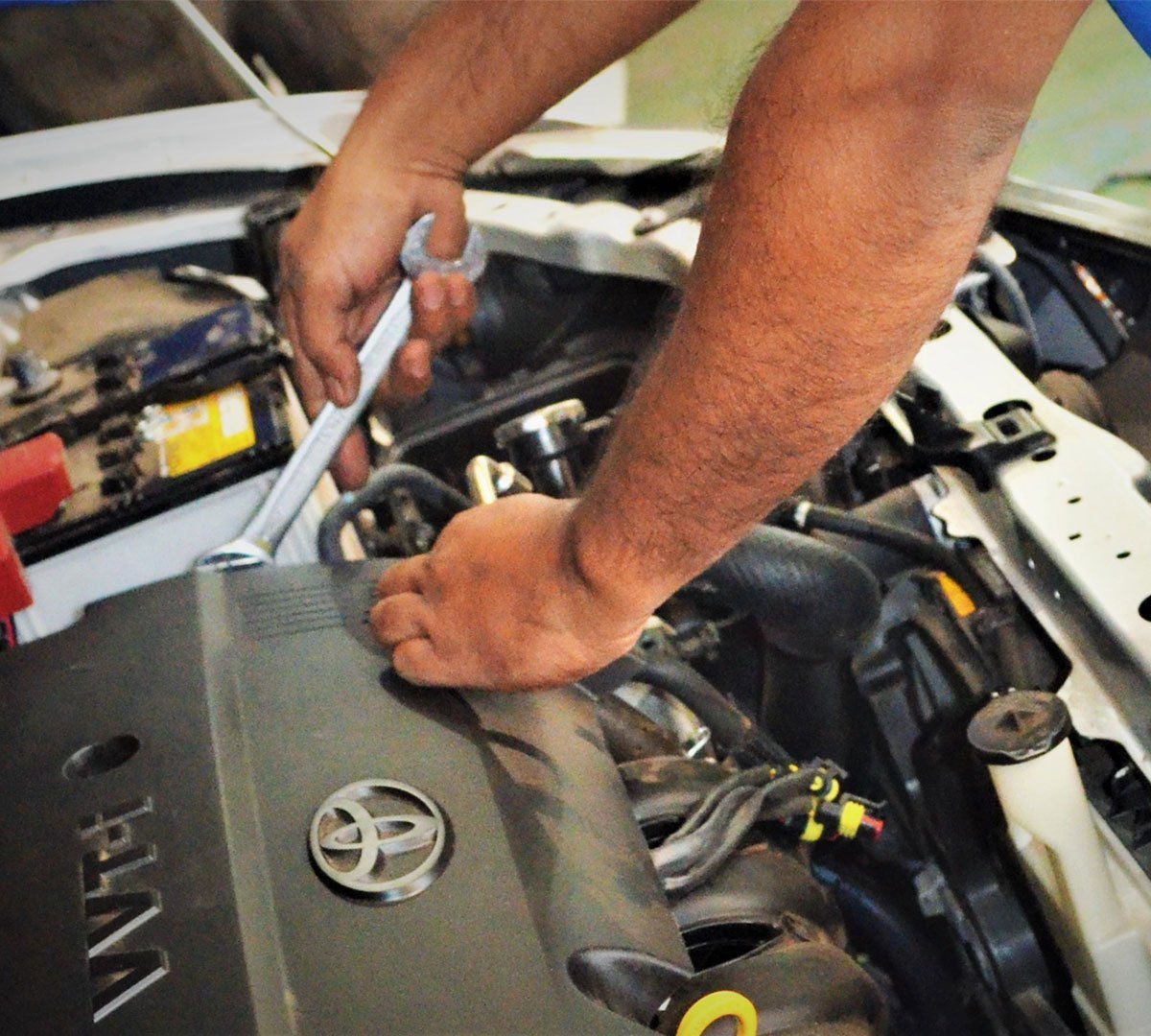
CNG kits assembled, bench-tested and dispatched to buyers across Sonipat district.
CNG Kit Installation in
Sonipat
Sonipat is where Haryana meets Delhi. The GT Road (NH-44) runs straight through the district, the KMP Expressway begins its arc at Kundli, and the Maruti Suzuki plant at Kharkhoda has turned the western belt into one of the country’s fastest-growing auto-manufacturing clusters. Add the industrial estates at Kundli and Rai, the universities around Rajiv Gandhi Education City, and the daily flow of commuters heading south into Delhi — and you have a district where tens of thousands of vehicles are working hard every single day.
Cars Energy installs AIS-024/AIS-028 approved CNG kits across Sonipat, engineered for what this district actually throws at a vehicle: sustained highway running between Murthal and Delhi, factory-shift duty cycles around Kharkhoda and Rai, construction dust from the Sector 23 and Bahalgarh build-out, and the thick December–January fog that settles over the NH-44 corridor. Refuelling is no longer a problem either — CNG outlets sit along the GT Road spine and around Kundli, Murthal, Rai, Ganaur and Kharkhoda. From a private car in Sector 15 to a staff shuttle fleet at an IMT unit, we handle the kit, the calibration, and the HR-12 RTO endorsement end to end.
Request a Sonipat Installation Quote →Table of Contents
- 3. Why Sonipat Drivers Are Moving to CNG
- 4. CNG Station Network & Refuelling Geography
- 5. Our CNG Kit Range for Sonipat Buyers
- 6. Matching the Kit to Sonipat’s Road Mix
- 7. Kit Comparison Table
- 8. Inspection Checklist Before You Approve
- 9. Component Inspection Table
- 10. Installation Process Step-by-Step
- 11. Sonipat CNG Pricing & Timelines
- 12. Indicative Cost Table
- 13. Legal & HR-12 RTO Endorsement
- 14. Documents Required for RC Endorsement
- 15. Cylinder Safety & Hydro-Testing
- 16. Post-Installation Maintenance & AMC
- 17. Warranty & Insurance Implications
- 18. CNG vs Petrol vs Diesel Economics
- 19. Troubleshooting Common CNG Issues
- 20. Fleet & Commercial Conversions
- 21. Why ECU Tuning Matters in Sonipat’s Climate
- 22. First-Time CNG Buyer’s Guide
- 23. Insurance Claims After a CNG Incident
- 24. Environmental & Regulatory Benefits
- 25. Common Myths About CNG
- 26. Post-Conversion Checklist
- 27. Haryana CNG Policy & NCR Rules
- 28. Customer Scenarios from Sonipat
- 29. Sonipat Areas & Markets We Serve
- 30. Location Grid
- 31. Frequently Asked Questions
- 32. Why Choose Cars Energy
- 33. Book Your Installation Today
3. Why Sonipat Drivers Are Moving to CNG
Sonipat’s driving patterns are unusually punishing for a district of its size. The GT Road carries a constant stream of vehicles south toward Delhi — roughly 45–55 km from Sonipat city, and barely 25–30 km from Kundli — while the KMP Expressway at Kundli feeds traffic west toward Manesar, Bawal and beyond. Inside the district, the Maruti Suzuki plant at Kharkhoda and the industrial estates at Kundli and Rai run shift-based workforces that travel in both directions at fixed hours. Layer on the students, faculty and staff moving between Rajiv Gandhi Education City campuses and the city, and the result is a vehicle population that racks up kilometres at a rate most districts never see.
That is exactly the profile where CNG pays off fastest. On a 2,000 km monthly duty cycle, switching from petrol to a well-tuned sequential CNG system typically releases ₹8,000–₹11,000 back into the household or business budget each month. There is a compliance angle too: Sonipat sits inside the National Capital Region, so winter air-quality measures that affect the wider NCR also shape what is practical to drive here. CNG vehicles have consistently remained among the least restricted categories, which makes conversion both a cost decision and a continuity decision. For a district built on manufacturing, logistics and daily commutes, that combination is hard to argue with.
4. CNG Station Network & Refuelling Geography in Sonipat
Sonipat’s CNG coverage follows the district’s transport geometry. The GT Road (NH-44) spine is the backbone — stations positioned along and around Murthal, Kundli, Rai and Ganaur serve both local users and the heavy flow of highway traffic heading to or from Delhi. Because the KMP Expressway begins at Kundli, that junction doubles as a natural refuelling point for vehicles entering or exiting the western freight corridor.
Inland, the Kharkhoda belt — home to the Maruti Suzuki plant and the surrounding industrial township — has its own station access suited to factory shift traffic and staff shuttles, while the Gohana Road and Rohtak Road corridors cover the western residential catchments. The city core around Sector 14, Sector 15, Model Town and Subhash Chowk sits within a short drive of multiple outlets. Practically speaking, a Sonipat driver planning a Delhi run, a Kharkhoda shift, or a KMP trip westward can build refuelling into the route rather than treating it as a separate errand. That is the single biggest reason range anxiety has stopped being a serious objection in this district.
5. Our CNG Kit Range for Sonipat Buyers
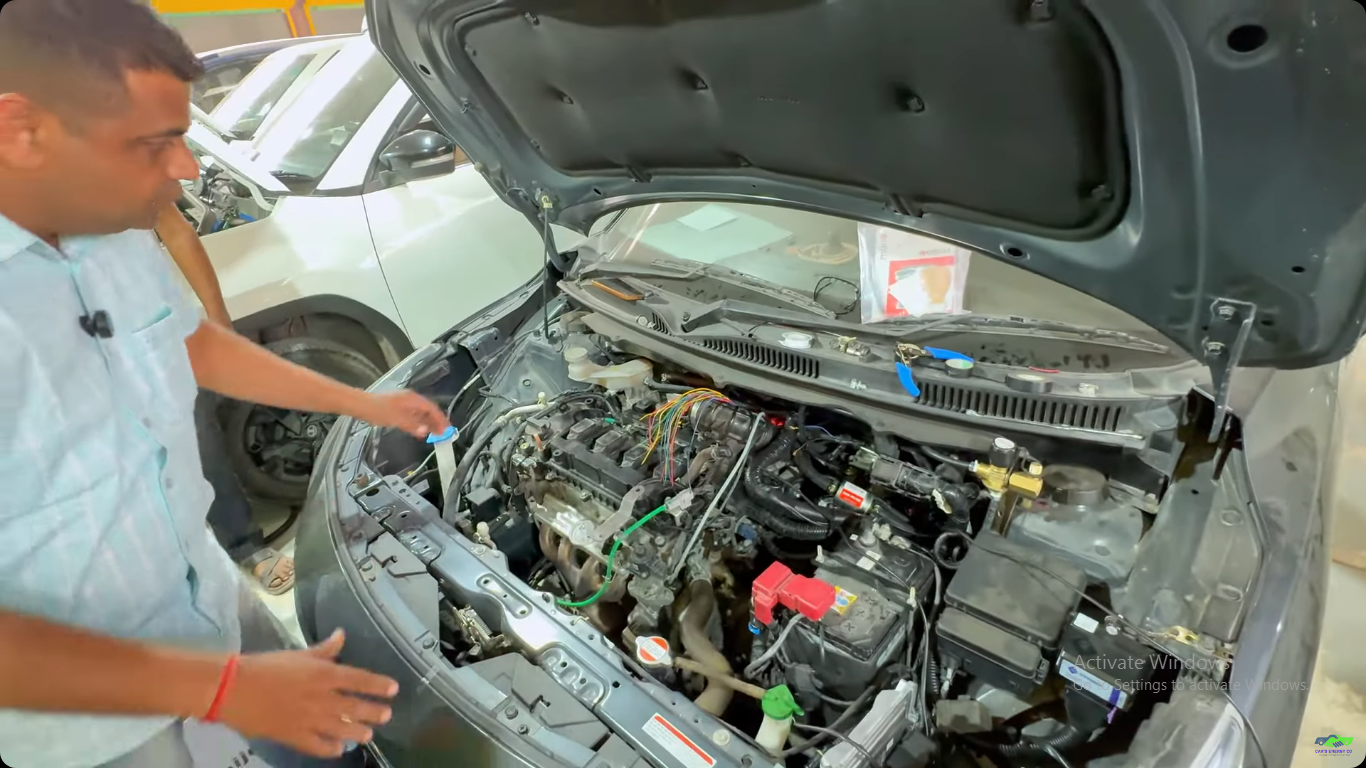
We fit a deliberately narrow, well-tested range of AIS-024 compliant kits rather than a long catalogue of unknowns. The selection is driven by what we see in Sonipat service bays: fine construction and industrial dust drawn in from the Sector 23 and Bahalgarh build-out, particulate from the Kundli and Rai estates, sustained highway heat soak on NH-44, and the moisture-heavy fog season that runs from late December into early February. Every installation includes dust shielding, heat management and moisture-proofed wiring as standard.
- Sequential MPI CNG Kits (Lovato, BRC, Tomasetto): The correct fitment for BS4 and BS6 fuel-injected cars. These systems read the vehicle’s OBD stream and inject gas per cylinder, which preserves throttle response on the GT Road and keeps idle steady in city congestion.
- Conventional / Venturi Kits: Viable only for older carburettor vehicles. We do not recommend them for ECU-controlled engines — on a highway where you are constantly overtaking trucks, the power loss is a real safety compromise.
- Diesel-to-CNG Evaluation: For IMT and Kundli estate operators, we assess engine compatibility, payload impact and route suitability before recommending any conversion path.
- ECU Tuning & Diagnostics: If an existing CNG system is stalling, surging, backfiring or losing power, we remap fuel trims and inspect the reducer, filters and harness rather than guessing.
- RTO Documentation: We prepare the full HR-12 endorsement package — Form 22D, installation certificate and PESO hydro-test papers — so the RC alteration is not held up for paperwork.
- Annual Maintenance Contracts: Built for high-utilisation vehicles. Filter changes, leak checks and anti-rust inspections matter more than usual in a district with this much construction dust and highway mileage.
6. Matching the Kit to Sonipat’s Road Mix
Two very different driving lives coexist in Sonipat. A car that mostly shuttles between Sector 14, Model Town and Subhash Chowk sees short trips, cold starts and heavy idling. A car doing the Kundli–Delhi run or a Kharkhoda shift commute sees sustained 80–100 km/h cruising with long heat cycles. The kit and the calibration have to be chosen for the life the vehicle will actually live.
Sequential MPI — The Default for Modern Cars
For any BS4/BS6 vehicle, a sequential system is the only defensible choice. It holds near-petrol power delivery, keeps idle stable, and lets the installer trim fuel precisely across the rev range. On the NH-44 and KMP stretches, correct sequential tuning is what prevents the lean-running condition that quietly damages exhaust valves in badly calibrated conversions.
Venturi — Only for Legacy Carburettor Vehicles
Venturi kits are cheap, mechanically simple, and entirely wrong for a modern engine. They sacrifice power, emissions and reliability. In a district where merging onto a fast-moving GT Road is part of the daily routine, putting a Venturi kit on an ECU-controlled car is not a saving — it is a risk.
7. Kit Comparison Table
| Kit type | Best for | Driveability | Price band | Warranty typical |
|---|---|---|---|---|
| Sequential MPI (branded) | BS4/BS6 fuel-injected cars — recommended for Sonipat | Near-petrol pickup, stable idle, OBD compatible | ₹42,000–₹55,000 | 2–3 years |
| Sequential MPI (budget brand) | Cost-sensitive modern car owners | Good when calibrated correctly | ₹33,000–₹42,000 | 1–2 years |
| Conventional / Venturi | Older carburettor cars only | Noticeable drop in pickup on modern engines | ₹18,000–₹28,000 | 6–12 months |
8. Inspection Checklist Before You Approve a CNG Installation
Sonipat’s combination of construction dust, industrial particulate, monsoon humidity and highway-speed heat will find every weak point in an installation. Before you accept delivery of a converted vehicle, check these deliberately:
- Dust and particulate shielding: The reducer and low-pressure filter should be tucked into a shielded location. Vehicles that regularly pass through the Kundli, Rai and Sector 23 construction belts clog filters faster than city-only cars.
- Heat routing: High-pressure lines must run clear of the exhaust manifold. Summer engine-bay temperatures on a hot NH-44 run are far higher than a short city trip ever produces.
- Fog-season moisture protection: Every CNG ECU connection must be fused, soldered and sealed inside heat-resistant, waterproof conduit. Exposed splices are the single most common cause of winter misfires.
- Cylinder mounting: The cylinder must be bolted to structural metal, never the floor pan. Brackets need to hold up to sustained highway vibration, not just city driving.
- Paperwork set: AIS-024 type-approval certificate, installation certificate and PESO hydro-test certificate should all be in your hand before the vehicle leaves the workshop.
9. Component Inspection Table
| Component | What it does | What good looks like |
|---|---|---|
| Cylinder | Stores compressed gas | PESO-certified, valid hydro-test stamp, secure mounting, valve protection, rust-free |
| High-pressure line | Carries gas from cylinder to reducer | Steel or reinforced, properly bent and deburred, anti-rust coated, no chafing |
| Reducer / vaporiser | Drops pressure and converts gas to vapour | Correctly sized for the engine, mounted away from exhaust heat, dust-shielded |
| ECU and wiring | Controls gas injection and fuel switching | Calibrated map, fused circuits, heavy-duty waterproof harness, no exposed splices |
10. How a Sonipat Installation Moves Through Our Process
Every vehicle goes through the same five-stage sequence, and a normal conversion is completed within 5–7 hours. The process does not change whether the car belongs to a private owner in Model Town or a company shuttle operating out of an IMT Kharkhoda unit.
- Phase 1: Health Check (1 Hour): Compression test, spark plug inspection and OBD-II scan. A tired engine will behave far worse on gas under sustained highway load, so we flag problems before touching the fuel system.
- Phase 2: Mechanical Fitment (3 Hours): Cylinder brackets are bolted to the chassis, the high-pressure line is routed underneath the vehicle, and the filling valve is positioned near the fuel filler.
- Phase 3: Plumbing & Wiring (1 Hour): The reducer is plumbed into the coolant circuit, the low-pressure hose is connected to the injector rail, and the CNG ECU is wired into the petrol injection harness.
- Phase 4: Leak Test (30 Mins): The system is pressurised and every joint is checked with soap solution. This step is never shortened or skipped.
- Phase 5: ECU Tuning & Road Test (1.5 Hours): The car is mapped on petrol first, then switched to gas. Fuel trims are logged via laptop and adjusted, followed by a road test covering both city speeds and a highway stretch.
11. Sonipat CNG Pricing, Timelines and What Affects the Quote
Installation cost in Sonipat is set by three things: the brand tier of the kit, the cylinder capacity you need, and how complex the vehicle’s fuel and electronic architecture is. We issue an itemised quotation before any work starts, showing hardware, labour, RTO documentation and the hydro-test certificate separately. It is worth being blunt about the bargain-bin option: unbranded kits frequently cannot produce a valid AIS-024 certificate, which means the HR-12 RTO will not endorse the RC. The apparent saving evaporates in repeat visits, rework and lost days.
12. Indicative Cost and Timeline Guide
| Item / service | Typical range (Sonipat) | What it covers |
|---|---|---|
| Sequential MPI kit + 60L cylinder | ₹42,000–₹55,000 | Kit, cylinder, injector rail, ECU, labour |
| RTO endorsement fee | ₹1,000–₹3,000 | Application processing under Haryana Motor Vehicle Rules |
| Cylinder hydro-test certificate | ₹500–₹1,000 | Mandatory safety document for RC endorsement |
| Insurance endorsement | ₹1,500–₹3,500 | Adding the CNG kit to the vehicle policy |
| Typical total (sequential) | ₹45,000–₹62,000 | Kit + installation + RTO + hydro-test + insurance |
13. Legal & HR-12 RTO Endorsement Requirements in Sonipat
Changing a vehicle’s fuel system without informing the registering authority is an offence under the Motor Vehicles Act. Sonipat-registered vehicles fall under the HR-12 RTO, and the Haryana Transport Department applies the retrofitment rules consistently. Two consequences matter more than the fine itself. First, an unendorsed RC is a visible defect that invites scrutiny at checkpoints. Second — and this is the expensive one — an insurer can lawfully repudiate a claim if the fuel system on the vehicle does not match the registration record. The endorsement process requires Form 22D, the retrofitter’s installation certificate, PESO hydro-test papers, and a physical inspection of the vehicle at the HR-12 office.
14. Documents Required for RC Endorsement in Sonipat
Assemble the file completely before you apply; a single missing document can push the process back by weeks.
- Original Registration Certificate (RC).
- Valid insurance policy that includes the CNG kit.
- Valid Pollution Under Control (PUC) certificate.
- Duly filled Form 22D (application for alteration/retrofitment).
- Type-approval certificate (AIS-024 / AIS-028) from the kit manufacturer.
- Installation certificate issued by the authorised workshop.
- PESO hydro-testing certificate for the CNG cylinder.
- For commercial vehicles: fitness certificate, route permit and proof of tax payment.
- Prescribed RTO endorsement fee receipt.
15. Cylinder Safety & Hydro-Testing
A CNG cylinder is a pressure vessel, not a fuel tank, and it is regulated accordingly. PESO requires hydro-testing every three years, counted from the test date stamped on the cylinder neck rather than from the day you bought it. The procedure fills the cylinder with water and pressurises it to 1.5× working pressure to measure permanent expansion. In Sonipat, where summers are severe and the fog season keeps surfaces damp for weeks, the cylinder valve, neck and high-pressure line unions deserve a corrosion and chafing check at every scheduled service. Only a PESO-approved centre can legally carry out and stamp the test.
16. Post-Installation Maintenance & AMC Packages
CNG hardware rewards scheduled attention and punishes neglect. Given the particulate load around the Kundli, Rai and Kharkhoda belts, we recommend a filter and leak inspection every 5,000 km. The low-pressure filter generally wants replacement near 20,000 km, and the high-pressure filter near 40,000 km. Spark plugs should be examined at every service because gas combustion places different thermal demands on the ignition system than petrol does. Our AMC plans are structured for daily commuters and commercial fleets, covering filter replacement, leak testing, anti-rust treatment and ECU diagnostics — and they are particularly valuable for company shuttles and staff vehicles where an unplanned workshop visit costs more than the repair.
17. Impact on Vehicle Warranty & Insurance
Most manufacturers treat an aftermarket CNG conversion as a modification that can affect engine and powertrain warranty, while leaving the rest of the vehicle warranty — suspension, electricals, body — largely intact. Read your own warranty booklet rather than relying on general claims. On the insurance side there is no ambiguity: declare the CNG kit to your insurer immediately after installation. The premium typically increases by ₹1,500–₹3,500, and without that endorsement the insurer can decline a claim connected to the gas system or to a fire. For a Sonipat commuter covering long distances on NH-44, that is a small premium against a very large downside.
18. CNG vs. Petrol vs. Diesel Economics in Sonipat
Sonipat’s combination of Delhi-bound commuting, factory shift travel and highway freight makes the CNG case unusually strong. The comparison below assumes 1,500 km of monthly running; the savings scale roughly in proportion to distance.
| Fuel Type | Approx. Cost per km | Monthly Cost (1,500 km) | Monthly Savings |
|---|---|---|---|
| Petrol | ₹7.00 - ₹8.00 | ₹10,500 - ₹12,000 | — |
| Diesel | ₹6.00 - ₹7.00 | ₹9,000 - ₹10,500 | ₹1,500 |
| CNG | ₹2.50 - ₹3.50 | ₹3,750 - ₹5,250 | ₹7,000+ |
19. Troubleshooting Common CNG Issues
Nearly every CNG complaint traces back to one of a handful of root causes. Catching them early keeps a small fix from becoming an engine repair:
- Rough idle or stalling: Usually a clogged low-pressure filter or moisture in a connector. Sonipat’s fog season and construction dust both accelerate this.
- Power loss under load: A weakening reducer or a lean map. Reducers work harder in extreme summer heat, and a marginal unit shows up first on highway gradients.
- Backfiring: On sequential systems, typically worn plugs or an intake leak. On Venturi systems it is almost always a tuning problem.
- Gas smell: Park in a ventilated area and get the system leak-tested immediately. Never treat a smell as something to monitor later.
20. Fleet & Commercial Conversions in Sonipat
Sonipat’s commercial demand is concentrated and predictable, which makes fleet conversion straightforward. Staff shuttles and supervisor vehicles serving the Maruti Suzuki plant at Kharkhoda, goods carriers attached to units in the Kundli and Rai industrial estates, school and college buses around the education city, app-based cabs, and last-mile delivery fleets all run high daily kilometres on fixed routes. That combination produces fast payback — often under a year on a sequential kit. We structure fleet work in phases so that only part of the fleet is off the road at any time, standardise kit specifications across vehicles so spare parts stay simple, and give fleet accounts priority AMC scheduling.
21. Why ECU Tuning Matters in Sonipat’s Climate
Sonipat experiences genuine seasonal extremes: 45°C-plus summers, a humid monsoon, and a December–January fog period that can push ambient temperatures down to single digits while keeping humidity high. CNG density shifts with both temperature and humidity, so a calibration that runs perfectly in June will run lean in January unless it has been mapped properly. Lean running is the harmful condition — it lifts combustion temperatures and can burn exhaust valves during sustained highway driving. We tune with laptop diagnostics, reading live O2 sensor data and setting fuel trims so the engine stays inside safe parameters through all four seasons and across both city and highway duty.
22. First-Time CNG Buyer’s Guide for Sonipat
- Fit a sequential kit on any modern car. Stay with established brands — Lovato, BRC, Tomasetto — rather than unbranded systems with unclear certification.
- Verify that the workshop can issue a genuine AIS-024 installation certificate. Without it, HR-12 endorsement cannot proceed.
- Accept the boot-space trade-off. A 60L cylinder removes a substantial part of a hatchback’s luggage capacity, so measure before you commit.
- Shorten your service interval. Every 5,000–7,000 km for oil and filters is a sensible rhythm for a CNG vehicle in this district.
- Always start on petrol and switch to gas once the engine is at operating temperature, particularly on fog-season mornings.
- Keep the original petrol system fully functional. It is your backup and it is required for cold starts.
23. Insurance Claims After a CNG Incident
When a CNG vehicle is involved in an accident or a fire, the surveyor will check three specific things: whether the RC carries the CNG endorsement, whether the kit was declared in the policy, and whether the cylinder’s hydro-test is current. Any gap in that chain gives the insurer room to reduce or reject the claim. Keep scanned copies of the RC endorsement, the insurance endorsement, the PESO certificate and the installation invoice in cloud storage or email. For anyone doing a daily NH-44 commute, having those documents accessible from a phone at the roadside is genuinely practical, not paranoid.
24. Environmental & Regulatory Benefits in Sonipat
Sonipat sits inside the National Capital Region and carries a substantial industrial base of its own — auto manufacturing, engineering units, food processing and logistics. Vehicular emissions add meaningfully to that load. CNG produces negligible particulate matter and materially lower nitrogen oxides than petrol or diesel, which improves local air quality and keeps the vehicle on the right side of NCR air-quality measures. For a district balancing rapid industrial growth with liveability, every converted vehicle is a small but real contribution to cleaner air — and to keeping mobility uninterrupted when seasonal restrictions tighten elsewhere in the region.
25. Common Myths About CNG Kits
Myth 1: CNG cars are slow.
Reality: A properly tuned sequential kit delivers 90–95% of petrol performance in everyday driving, including highway overtaking.
Myth 2: CNG cylinders are dangerous.
Reality: PESO-certified cylinders are thick-walled steel pressure vessels tested far beyond normal operating pressure. They are structurally robust in a collision.
Myth 3: CNG damages the engine.
Reality: Gas burns cleaner than petrol and leaves less carbon behind. Engine damage attributed to CNG is almost always the result of a lean map or skipped maintenance.
Myth 4: You lose the petrol option.
Reality: A bi-fuel sequential system retains the full petrol circuit. You switch between fuels at will.
26. Post-Conversion Checklist for Sonipat Drivers
- Confirm that the installation certificate, PESO certificate and the cylinder’s stamped number all match.
- Check that brackets and high-pressure lines are painted or otherwise corrosion-protected.
- Warm the engine on petrol for a few minutes each morning before switching over.
- Watch the coolant level — the reducer draws engine coolant to vaporise the gas.
- Log your mileage for the first 1,000 km and return for recalibration if consumption looks abnormal.
- File the RTO paperwork without delay; do not let the HR-12 endorsement drift.
- Notify your insurer and pay the additional premium before you resume normal driving.
27. Haryana CNG Policy & NCR Rules
Two separate policy layers matter to a Sonipat buyer. At the state level, Haryana has offered incentives for CNG adoption, including a motor vehicle tax rebate on newly registered CNG vehicles — useful if you are buying new rather than retrofitting. At the regional level, Sonipat’s position inside the NCR means seasonal air-quality measures can affect which vehicles are comfortable to run through the winter. CNG has consistently sat among the least restricted categories, which is a practical advantage that does not show up in a simple fuel-cost calculation. Because rebate percentages and eligibility conditions are revised from time to time, confirm the current Haryana Transport Department notification before finalising a purchase.
28. Customer Scenarios from Sonipat
The Sector 15 Delhi commuter: A resident driving to Delhi five days a week on the GT Road recovered the cost of a sequential kit well inside a year. The more valued outcome was budget stability — a predictable monthly fuel figure instead of a number that moved with petrol prices.
The Kharkhoda plant shuttle operator: A contractor running staff shuttles between Kharkhoda and surrounding residential clusters converted a batch of vehicles in phases. Because the routes were fixed and the daily kilometres high, per-vehicle fuel cost fell sharply and payback landed under ten months. Scheduled AMC slots meant vehicles were serviced between shifts rather than pulled out mid-week.
The Kundli estate goods fleet: A small operator moving components between Kundli units and Delhi NCR consolidated its CNG conversions onto a single kit specification, which simplified spares and cut diagnostic time across the fleet.
29. Sonipat Areas & Markets We Serve
We install CNG systems across Sonipat district — the city sectors and older colonies around Sector 14, Sector 15, Model Town, Subhash Chowk and Atlas Road; the GT Road settlements at Murthal, Kundli, Rai, Bahalgarh and Ganaur; the industrial and manufacturing belt around Kharkhoda and IMT Kharkhoda; and the western corridors along Gohana Road and Rohtak Road. Customers range from private car owners and app-based drivers to school transport operators, university staff vehicles, factory shuttles and commercial goods fleets. Our documentation team works with the HR-12 RTO routinely and prepares the alteration file so the endorsement is not delayed by avoidable errors.
30. Location Grid
GT Road (NH-44): Murthal – Kundli – Rai
The district’s primary highway spine and its densest CNG access. Sustained high-speed running, heavy freight traffic, and the main route south toward Delhi.
Sector 14, 15, 23 & Model Town
Sonipat’s established residential core. A large Delhi-bound commuter base, short city trips, and multiple CNG outlets within a short drive.
Kharkhoda & IMT Belt
Maruti Suzuki’s plant and the surrounding industrial township. Shift-based traffic, staff shuttles and high-utilisation commercial vehicles with fast payback.
Kundli, KMP Junction & Gohana Road
The KMP Expressway origin point, Rajiv Gandhi Education City campuses, and the western residential corridors. Practical for freight and long-distance commuters.
31. Frequently Asked Questions
Is CNG kit installation legal in Sonipat?
Yes. Retrofitment is legal when the kit is AIS-024/AIS-028 approved, installed by an authorised workshop, and endorsed on the RC through the HR-12 RTO.
How much does it cost in Sonipat?
A sequential MPI kit with a 60L cylinder typically costs ₹42,000–₹55,000. With RTO and insurance, the all-in figure usually lands between ₹45,000 and ₹62,000.
How long does the installation take?
Fitment and tuning are completed in 5–7 hours. RTO endorsement generally takes 7–30 working days depending on the HR-12 office workload.
Can I install CNG in a BS6 car?
Yes, with a sequential MPI kit and proper ECU calibration. Venturi kits are not suitable for BS6 vehicles under any circumstances.
Do you help with HR-12 RTO paperwork?
Yes. We prepare the Form 22D application, the installation certificate and the hydro-test package, and coordinate the endorsement process.
Will it void my car’s warranty?
It may affect engine and powertrain warranty. Check your manufacturer’s terms before converting; the remaining vehicle warranty is generally unaffected.
Are there enough CNG stations in Sonipat?
Yes. Outlets along the GT Road at Murthal, Kundli, Rai and Ganaur, plus access around the Kharkhoda belt, mean refuelling can be built into normal routes rather than treated as a detour.
32. Why Choose Cars Energy for Your Sonipat Installation
We treat certification and installation quality as a single deliverable. Every kit is AIS-024 approved, every cylinder is PESO-certified, and every RC file is assembled for HR-12 endorsement rather than improvised later. Our technicians tune with diagnostic software and live sensor data, not by ear. And we design for the specific conditions Sonipat imposes — construction and industrial dust from the Kundli, Rai and Sector 23 belts, sustained NH-44 heat soak, and the moisture of the fog season. From the initial health check through the road test and the RTO file, the work is handled in one place so you are not shuttling between workshop, transport office and insurer.
33. Book Your Installation Today
Workshop: 215 & 216/5, Ground Floor, Opposite Metro Pillar 536, Mundka, Udyog Nagar, New Delhi 110041. Serving Sonipat customers with scheduled fitment slots and HR-12 documentation support.